History
Dating the Kirk
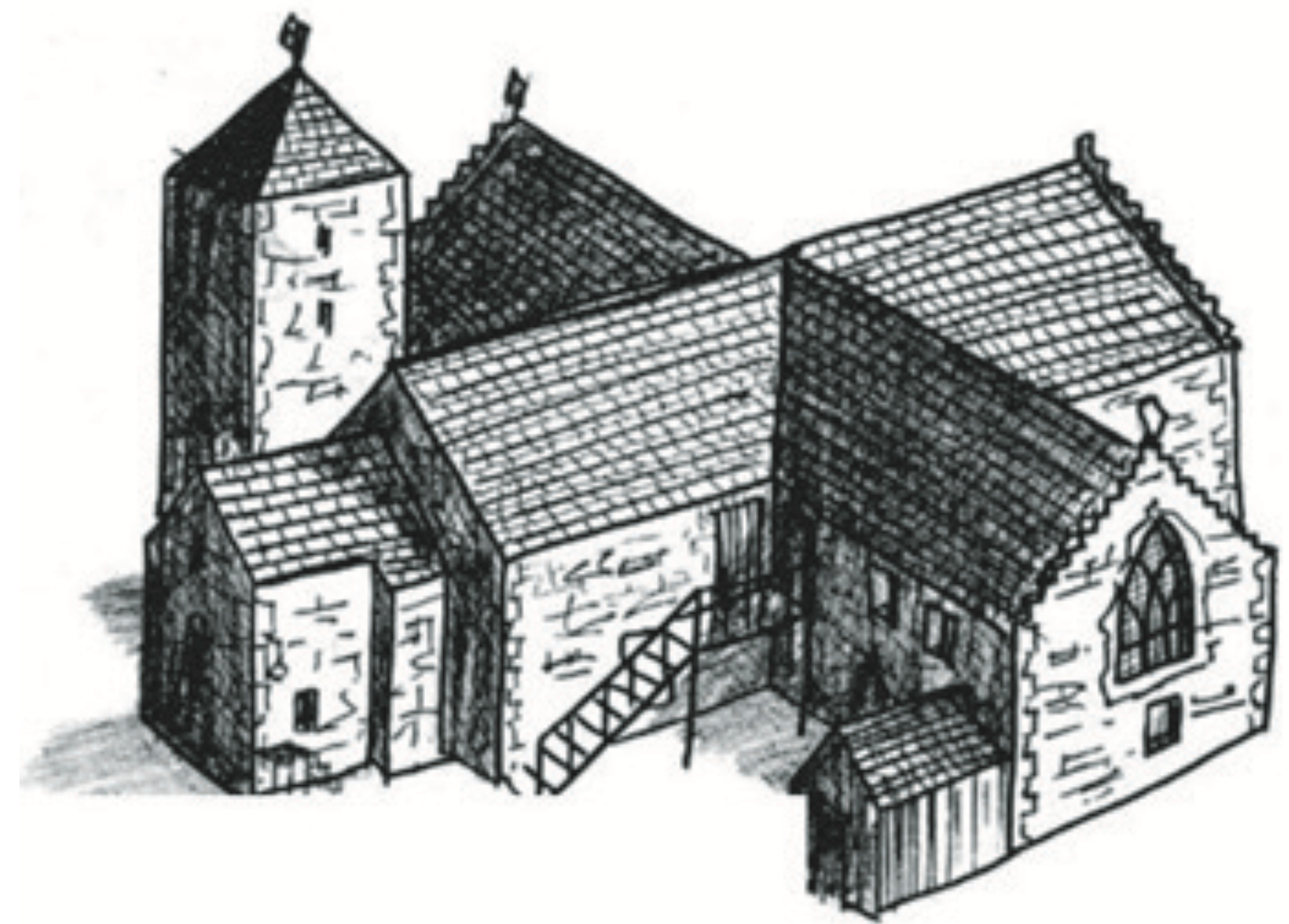
The site can be traced back to the Norse period. The Chancel and the lower part of the Tower are the oldest areas, dating from about 1120. Two stones with runic inscriptions have been found. The one found between the gable and the river is in the form of a cross and was covering a crouched burial of a man and a child. The other found as a re-used stone, placed upside down, on a corner of the Tower (A replica stone has replaced the original in the Tower.) has a runic inscription along one edge and a cross engraved on the flat face. These stones predate the Kirk – probably 11th-12th century – and can be seen in the Thurso Visitor Centre (Museum).
The Kirk
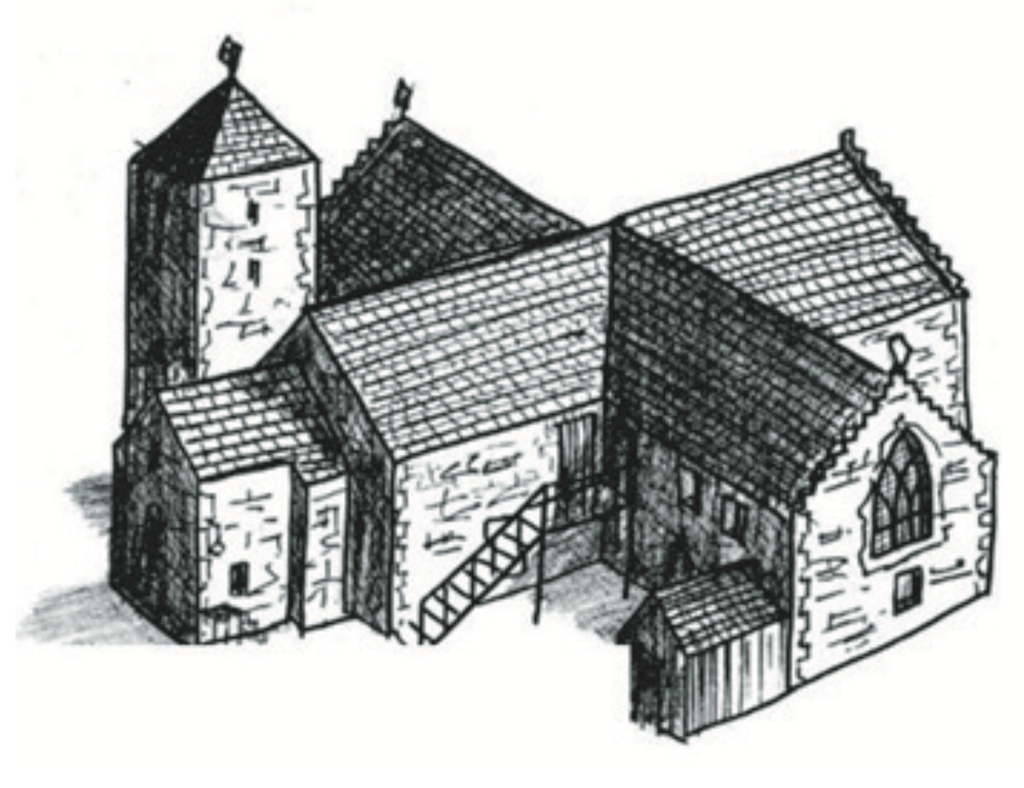
The original Kirk was rectangular with the Nave running between the east and west gables which still exist. It would have included the two storey Chancel and a Tower lower than the one seen at present. The Kirk doorways were one facing north (the School Door) signs of which are still visible, and one facing south, the gated entrance which still exists. This entrance had a porch with stone benches which has been reconfigured over the centuries. The original windows were probably slit windows and the window heads of these can be seen re-used in later stonework in the Kirk.
This original Kirk might have become the cathedral for Caithness but Bishop Gilbert Murray built the first cathedral at Dornoch instead of Thurso. The Kirk has been Catholic, Episcopalian, Protestant/ Presbyterian, surviving the Reformation (1560) and the Restoration.
In 1828 the roof was causing concern and a report revealed it was unsafe. The Foundation Stone for the new church (St Peter’s and St Andrew’s in the town square) was laid on the 18th May 1830. The Rev. Walter Taylor Ross led the final service on the last Sunday in December 1832. The roof was removed in 1833.
The Tower
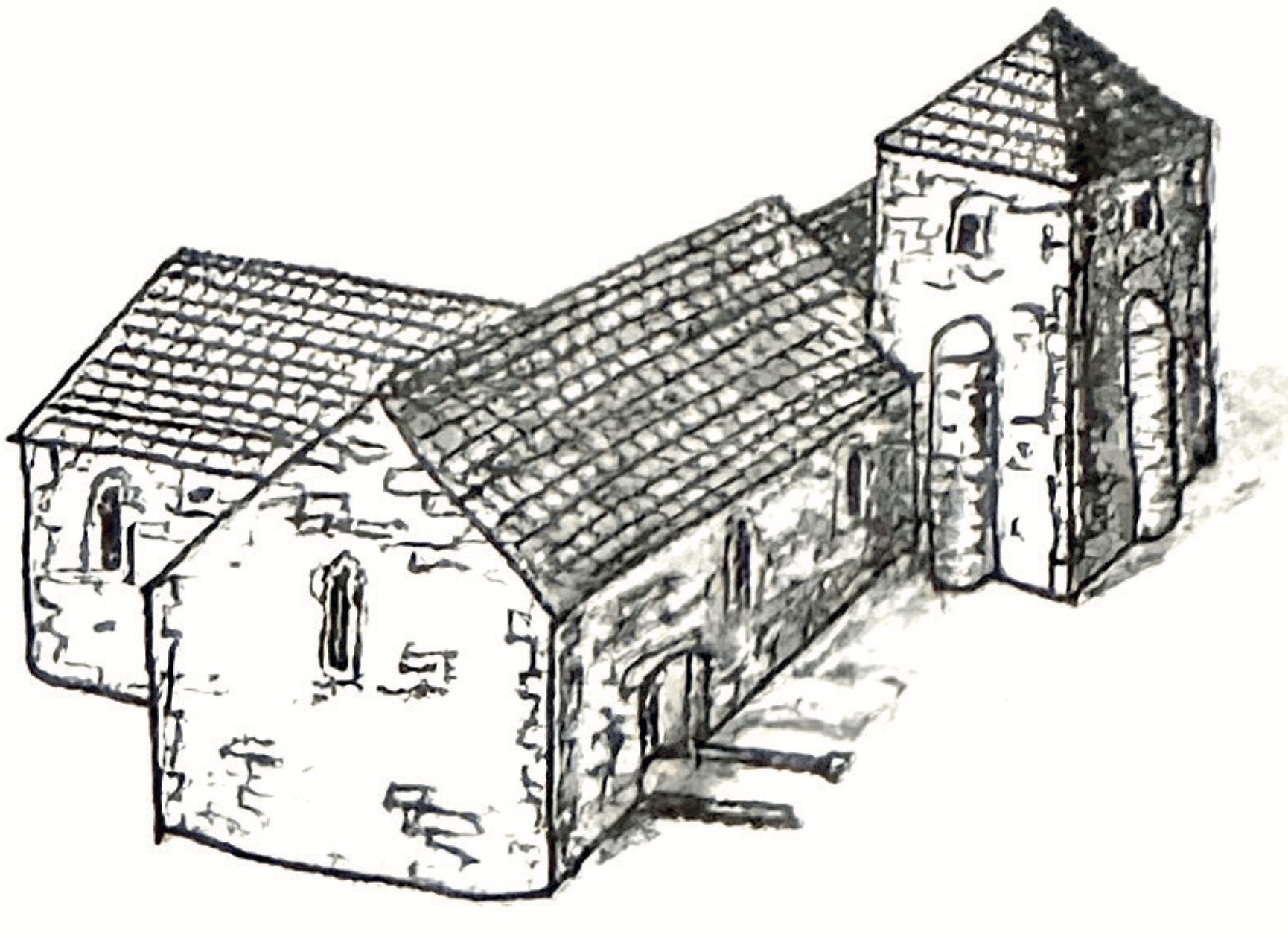
Strangely, the Tower is at an angle of 17 degrees to the Kirk. Its stair is an ascending barrel vault construction – the upper stair supported by the arched roof of the lower section, a solid cylindrical core and outer walls reinforced by half-round buttresses. (The turn of the stair is non-defensive.)
There is a doorway off the Tower into the upper room of the Chancel. At this level the circular interior becomes rectangular for the upper tower added in the 18th century to house a clock driven by falling weights (1719) requiring a hollow tower. In 1740 the three bells were recast into one. The Tower roof was pyramidal.
The lower part of the Tower stair served as a prison cell and a door was made in the west wall from the platform at the top of the stair to the Laird’s Loft in the South Aisle to access the court room without going through the Kirk. It is likely that women accused of witchcraft were imprisoned and interrogated in the Tower and Chancel upper room during the 17th and early 18th centuries.
The Chancel
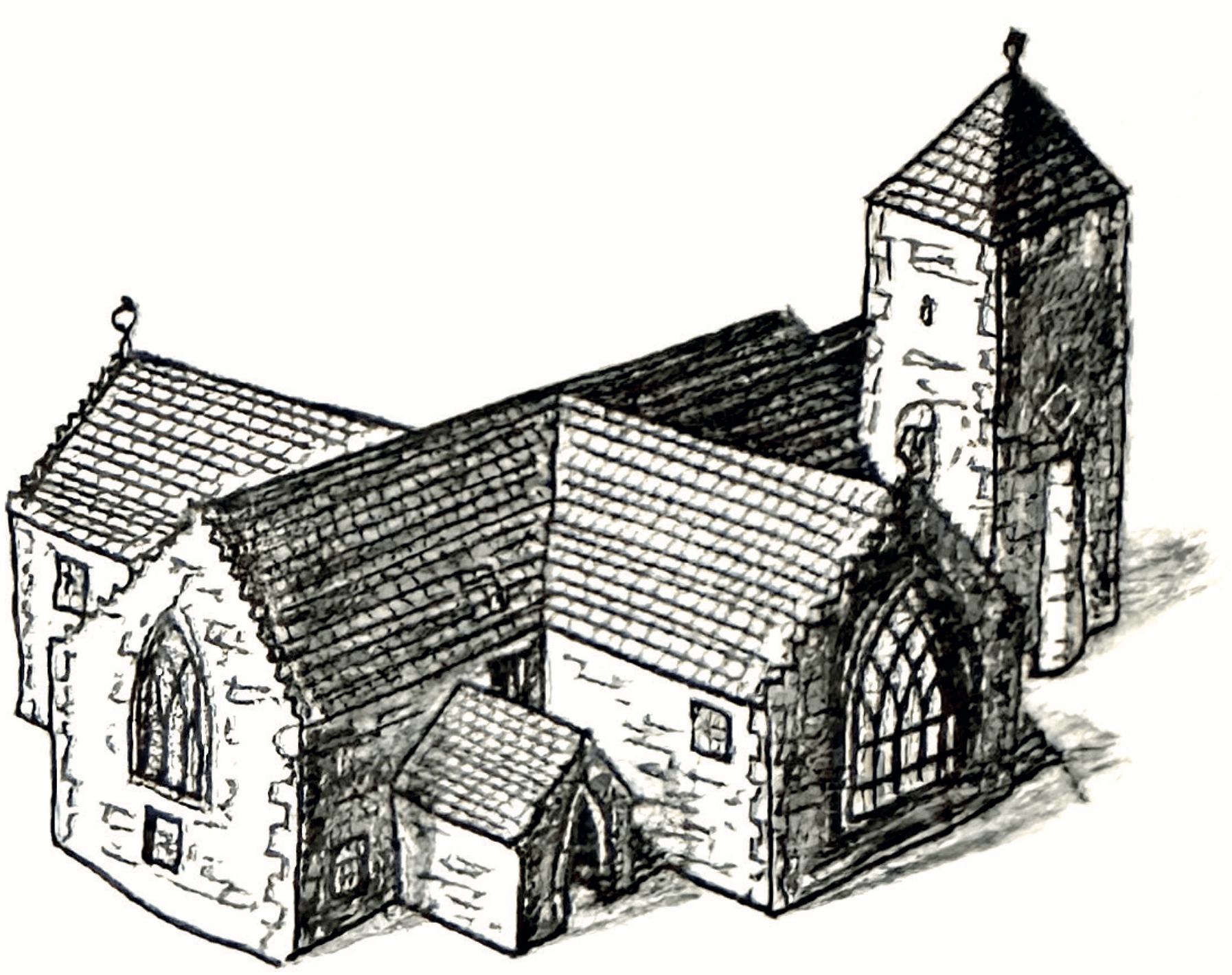
The early altar of the Kirk would have been in the Chancel.
The Chancel consisted of two storeys, the upper room serving as accommodation, a room for the cleric/ priest/ minister to prepare, a meeting room/ a Session room, a courtroom (evidenced 1726) and a schoolroom. The lower area originally had three windows. Later in the 17th century the south one was changed to a door and the east one was enlarged. Both have since been blocked up. The North window was replaced by a Sinclair/ Sutherland memorial which depicts armorial